
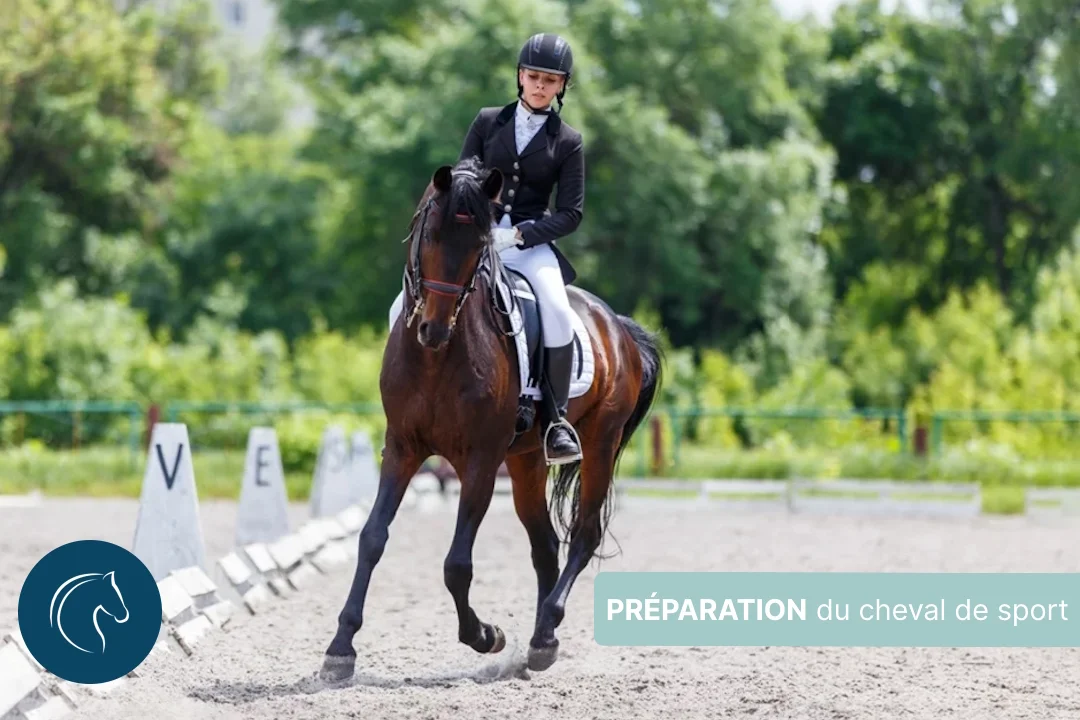
Sport horses place intense demands on their musculoskeletal system during training and competition. Whether jumping, dressage, racing, or endurance riding, each discipline places specific stresses on the joints, muscles, and back. Proper preparation beforehand helps keep the horse comfortable and allows it to perform to its full potential.
Here's how to understand the challenges of athletic training, recognize your horse's needs, and take action with concrete solutions.
Is preparing a sport horse essential?
Physical exertion places significant mechanical stress on horses. Their joints, tendons, backs, andnecks are particularly affected. Without proper preparation, the risk of stiffness, discomfort, or decreased performance increases. Several factors explain why this preparation deserves special attention:
- The intensity of competition often exceeds that of daily training, which increases stress on joints and muscles.
- Transportation to competition venues can cause muscle tension and stress, affecting the horse's flexibility.
- Changes in environment and terrain alter the footing and can increase sensitivity in the feet and limbs.
- The age and sporting history of the horse influence its ability to recover between efforts.
- A well-prepared horse approaches competitions with greater comfort, flexibility, and readiness.
What warning signs should you look out for before a competition?
Certain signs may indicate a lack of preparation or a need for special support. Being attentive to these signs allows you to adjust your approach before the big day. Here are the main signs to look out for:
- Stiffness at the start of work, especially after rest or transport.
- Reluctance to jump, hesitation before jumps, or lack of commitment.
- Difficulty bending, resistance during transitions, or loss of flexibility in the back.
- Sensitivity of the feet on certain types of terrain, shortened or irregular strides.
- Unusual fatigue, lack of motivation at work, or behavioral changes.
- Horse moving around in the mounting block or bucking, signs often associated with back discomfort.
How to properly prepare your horse before a sporting event?
A comprehensive approach is recommended, combining progressive training, stress management, appropriate care, and nutritional support. Here are some practical tips to help your horse compete in the best possible condition:
- Plan a progressive training program: adjust the intensity of your sessions in the days leading up to the competition, alternating between training and recovery.
- Take care with your warm-up: a suitable warm-up prepares your joints, muscles, and back for exercise.
- Manage transportation: plan breaks if the journey is long, and allow the horse time to relax upon arrival.
- Adapt your diet: a balanced diet supports energy levels and muscle recovery.
- Monitor hydration: a well-hydrated horse recovers better and maintains muscle flexibility.
In addition to these measures, targeted nutritional support can help preserve mobility and joint comfort in athletic horses.
Competition Pack: natural support for mobility and flexibility
The Competition Pack from Lore & Science is a natural solution designed to support sport horses before competitions. It combines two complementary dietary supplements: Art Flash and Cortiphyt.
Art Flash → Supports joints and mobility
Cortiphyt → Supports the back and neck
The advantages of the Competition Pack:
- Helps support overall mobility and joint comfort.
- Contributes to flexibility and strength in the back and neck.
- Supports comfort for sensitive joints and feet.
- Promotes the horse's tone in preparation for competitions.
- Products tested and proven to be free of doping substances.
Directions for use: take both supplements simultaneously at a dose of 20 ml in the morning for 3 days prior to competition, then 20 ml approximately 1 hour before the event. Mix with food or administer directly into the mouth.
-


Pack Compétition - Horse mobility and suppleness
The initial price was €159.80.143,83 €The current price is: €143.83.
Conclusion
Preparing a sport horse is a long-term process: tailored training, stress management, attentive care, and targeted nutritional support make all the difference. By identifying signs of stiffness, joint sensitivity, or fatigue early on, you can protect your horse's comfort and performance.
FAQ
When should you start preparing for a competition?
Ideally, adjust your training in the week leading up to the event. The Competition Pack should be used two days before and on the day itself.
Is the Competition Pack suitable for all sport horses?
Yes, it is suitable for horses involved in show jumping, dressage, racing, or endurance riding. Seek veterinary advice in the case of pregnant mares.
Are the products tested for doping?
Yes, the ingredients have been tested in a laboratory for compliance with current doping regulations.
How should the products be administered?
Mix with food or administer directly into the mouth using the syringe provided.