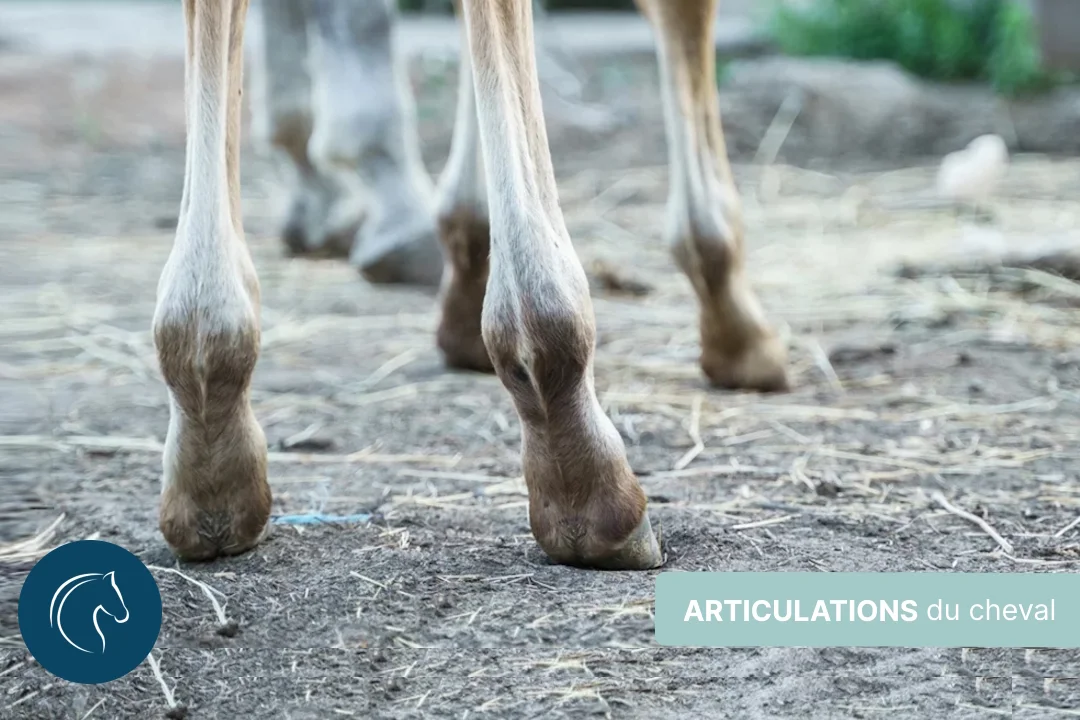
A horse's joints are constantly under strain, whether the animal is being ridden, training for sport, out for a ride, or simply moving around in the pasture. Over time or withrepeated exertion, these locomotor structures can become weakened, leading to stiffness, pain, or even lameness.
Preventing joint injuries not only preserves the horse's well-being, but also maintains its performance and avoids costly complications in the long term.
Why can horses suffer from joint problems?
Joint problems arise when the supporting structures—cartilage, tendons, ligaments—are overused or weakened by external or internal factors. Understanding these causes allows us to take effective action and anticipate injuries.
Here are the main factors that can weaken a horse's joints:
- Working on hard, uneven, or slippery floors.
- Training that is too intense, irregular, or poorly progressive.
- Excess weight increases pressure on the joints.
- Conformation or morphological predispositions.
- Lack of warm-up or insufficient recovery.
- Natural aging of cartilage and supporting structures.
Signs to look out for in your horse
Horses often hide their pain, but certain behaviors or physical signs should be cause for concern. Early detection of these signs allows you to take action before the situation worsens.
Here are the main signs of joint fragility:
- Stiffness at the beginning of the session.
- Hesitant, irregular, or asymmetrical gait.
- Difficulties with transitions or refusal to perform certain exercises.
- Heat or slight inflammation around a joint.
- Loss of engagement of the hindquarters or lack of drive.
- Decreased performance or economical behavior.
How can you effectively prevent joint injuries?
Preserving a horse's joints requires a combination of work management, healthy lifestyle choices, and targeted natural support.
Here are some concrete actions to implement:
- Warm up gradually to prepare your muscles and joints.
- Vary work areas to reduce repetitive strain.
- Include rest and recovery periods in the schedule.
- Maintain an ideal body weight to limit stress on the joints.
- Secure the work environment to prevent slips and injuries.
- Adjust limb protection according to the effort required.
- Naturally strengthen your joints with a targeted supplement.
In addition, a natural solution can help support cartilage, reduce stiffness, and maintain optimal mobility.
Joints Support: natural support for your horse's joints
Granulated supplement, Joint Support is formulated to support joint health, protect cartilage, and promote flexible and comfortable movement. It combines essential nutrients known for their role in mobility and joint comfort.
The advantages of Joints Support:
- Helps maintain healthy cartilage and tendons.
- Supports fluidity and flexibility of movement.
- Helps reduce stiffness.
- Supports aging horses.
- Contributes to long-lasting joint comfort.
This natural support is particularly useful for sport horses, aging horses, or those with joint predispositions. For owners, it is a simple and preventive way to maintain mobility, improve comfort, and reduce the risk of veterinary costs related to joint disorders.
-


Joints Support - Supporting the horse's cartilage
Price range: €49.90 to €99.90
Conclusion
Protecting a horse's joints is essential to ensuring its well-being, prolonging its sporting career, and preserving its quality of life. Through appropriate work management, a safe environment, and the natural support of Joints Support, it is possible to effectively prevent joint injuries and ensure flexible, durable, and comfortable locomotion.
FAQ
Can young horses also have joint problems?
Yes, especially during growth, in cases of lack of progressivity in the work or unsuitable surfaces.
Is a joint supplement useful for prevention?
Yes, especially for sport horses, older horses, or those with sensitive conformation.
Can you work with a horse that has mild joint discomfort?
It is best to seek veterinary advice, as inappropriate exercise can aggravate the situation.
Is Joint Support suitable for older horses?
Yes, it helps support flexibility and comfort in aging joints.