
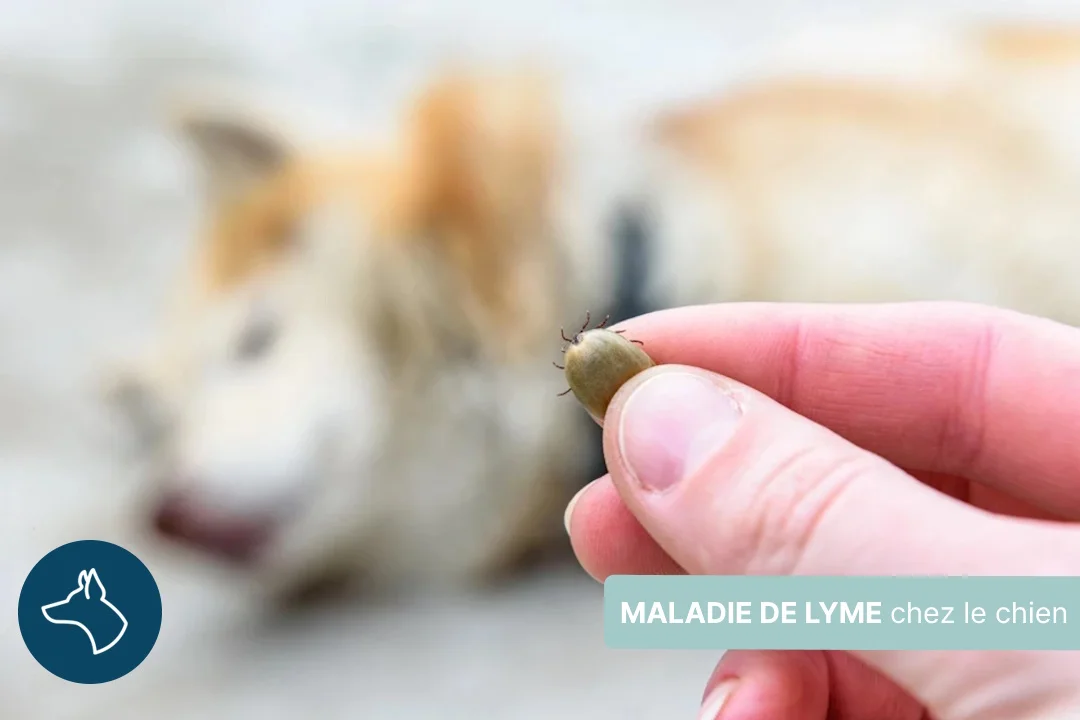
Lyme disease, also known as borreliosis, is a bacterial infection transmitted by ticks infected with the bacterium Borrelia burgdorferi. It affects many dogs every year in France, particularly those that live in forests, grassy areas, or wetlands.
Often difficult to detect, it can develop silently and have a lasting effect on your pet's health if not treated in time.
Here's how to understand the mechanisms of this disease, recognize the clinical signs, and support your dog with appropriate solutions.
How does a dog contract Lyme disease?
Transmission occurs exclusively through the bite of a tick carrying the Borrelia burgdorferi bacterium. Not all ticks are infected, but in certain regions of France, particularly the Massif Central, Alsace, Brittany, and bocage areas, prevalence can be high.
The bacteria are transmitted after several hours of tick attachment, hence the importance of rapid inspection and removal after each outdoor outing. Several factors increase exposure:
- Walks in the forest, in tall grass, or in wetlands.
- Absent or insufficient pest control.
- Late removal of the tick after attachment.
- The presence of deer or wild rodents in the immediate environment, which are natural reservoirs of the bacteria.
What are the symptoms of Lyme disease in dogs?
Unlike humans, dogs do not always develop the characteristic ring-shaped redness (erythema migrans) at the site of the bite. The signs are often delayed and non-specific, making diagnosis more difficult.
Some dogs may be carriers without ever developing symptoms, while others show more pronounced signs. The most commonly observed signs are:
- Intermittent fever, fatigue, and loss of appetite.
- Lameness, often in one limb, which can migrate from one leg to another (Lyme arthritis).
- Joint pain, joint swelling, morning stiffness.
- Swollen lymph nodes (lymphadenopathy).
- Persistent fatigue, decrease in usual activity.
- In advanced forms: kidney damage (Lyme glomerulonephritis), neurological or cardiac damage, which are rarer but serious.
How should you respond to Lyme disease?
As soon as suspicious signs appear or after a tick bite in a high-risk area, it is essential to consult a veterinarian. A blood test (Lyme serology, complete blood count, kidney function test) will help guide the diagnosis. Here are the essential measures to take:
- Remove the tick quickly and correctly with a tick remover, without crushing or burning the animal.
- Consult your veterinarian if symptoms appear within weeks of a bite.
- Set up a regular parasite control program, tailored to the season and the dog's environment.
- Limit high-risk areas during outings and systematically inspect your pet's coat upon returning home.
- Support the body during convalescence or when weakened with appropriate supplements.
In addition to veterinary care, natural solutions can help support the body's immune defenses and recovery capabilities.
Lym Immun Dog: natural support for Lyme disease and piroplasmosis
Lym Immun Dog is a natural dietary supplement formulated to support dogs facing vector-borne diseases such as Lyme disease and piroplasmosis. Its formula combines carefully selected plant extracts and targeted active ingredients to act on several levels.
The benefits of Lym Immun Dog:
- Supports the immune system to strengthen the body's resistance.
- Helps support your dog's vitality and energy
- Helps support recovery after an infection.
- Can be used alongside veterinary treatment, with the advice of a practitioner.
A 100% plant-based solution to mix with food, Lym Immun Dog is easy to administer on a daily basis, directly into the food bowl for quick and easy intake.


Conclusion
Lyme disease is a serious concern for all dog owners, especially in high-risk areas. Active tick prevention, careful monitoring after outings, and regular veterinary check-ups are the cornerstones of effective protection.
In cases of weakened health or convalescence, Lym Immun Dog from Lore & Science can be a valuable natural ally in supporting your pet's immunity and vitality, as a complement to veterinary care.
FAQ
My dog has been bitten by a tick. Should I seek immediate medical attention?
It is not necessarily urgent, but remove the tick quickly with a tick remover. Monitor your dog for the next 4 to 6 weeks and consult your veterinarian if any symptoms appear (fever, lameness, lethargy).
Can dogs be vaccinated against Lyme disease?
A vaccine exists against canine borreliosis. Talk to your veterinarian about it, especially if your dog lives in areas where the disease is prevalent. Vaccination does not replace parasite prevention but provides additional protection.
Can Lyme disease be transmitted to humans from dogs?
No, dogs do not directly transmit Lyme disease to humans. However, they can bring infected ticks into the home environment. Effective parasite prevention protects both the dog and, indirectly, the rest of the household.
Can Lym Immun Dog be used at the same time as antibiotic treatment?
Yes, but it is advisable to inform your veterinarian so that the overall treatment protocol can be adapted to your dog's situation.