
Why can a dog's bowel function go awry?
A dog's intestinal transit depends on a fine balance between diet, intestinal flora, hydration and activity level. A number of factors can upset this balance, causing either a slowdown (constipation) or an acceleration (diarrhea):
- Sudden change of food or ration, rich treats or table scraps.
- Unsuitable ration (too low in fermentable fibre or quality protein).
- Lack of hydration or regular physical activity.
- Stress (travel, childcare, new environment) and anxiety.
- Digestive parasitosis, inflammatory disorders, food sensitivity.
- Side effects of certain medications or age (puppies and seniors are more sensitive).
Signals to recognize early
When transit slows down (constipation)
Constipation refers to infrequent, dry and difficult bowel movements. Pay particular attention to:
- Efforts or groans during defecation, frequent posture without emission.
- Small, dry or "ball" stools, sometimes with a little mucus.
- Abdominal pain, lethargy, loss of appetite, bloating.
- Licking of the hindquarters or visible discomfort.
When transit speeds up (diarrhea)
Diarrhea means soft to liquid stools and more frequent emissions. Look for the following signs:
- Frequent emergencies to go out, sometimes accidents in the house.
- Mucus may be present, with occasional streaks of blood.
- Borborygma, gas, discomfort or loss of enthusiasm for meals.
- Risk of dehydration if losses are high.
What can be done to rebalance transit?
Prompt treatment reduces discomfort and complications. From the very first signs, adopt simple gestures and monitor progress over 24 to 48 hours.
Immediate action
- Ensure free access to clean, fresh water; provide several water points.
- Split the ration (2 to 3 small meals) with a highly digestible, balanced food.
- Maintain regular outings and gentle activity to stimulate intestinal motricity.
- Avoid table scraps, bones and sudden changes in diet.
- Support flora with prebiotics and/or probiotics when necessary.
- Maintain a routine of daily exercise and quiet time to limit digestive stress.
When should you see your vet?
Some signs require immediate veterinary advice:
- Puppy, senior dog, fragile animal (known pathology) or current medication.
- Repeated vomiting, marked pain, depression, fever, suspected foreign body ingestion.
- Presence of large amounts of blood in stools, signs of dehydration.
- No improvement beyond 24-48 hours despite basic measures.
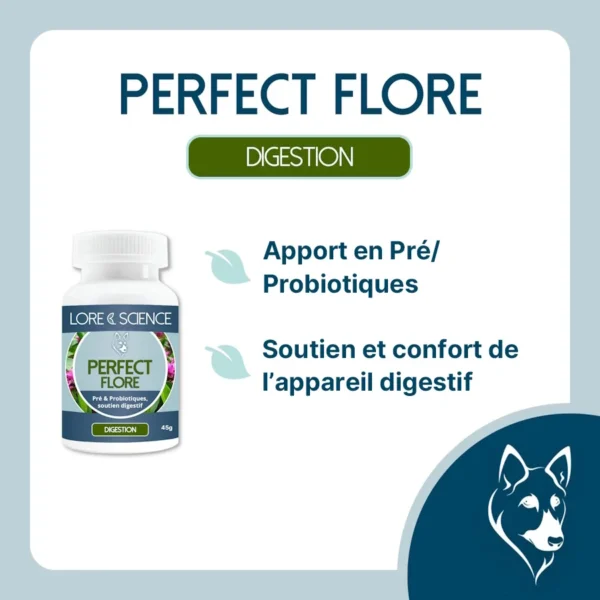
Digestion Pack: Targeted support for balanced flora
The Intestinal Digestion Pack from Lore & Science is part of a natural approach to supporting digestive comfort in dogs. Its combination of selected nutrients and active ingredients is designed to help balance the microbiota and improve stool quality, while respecting the animal's needs.
The benefits of the Digestion Pack :
- Helps rebalance intestinal flora and support digestion.
- Contributes to stool quality and regularity.
- Supports digestive comfort during dietary changes.
- Promotes gradual recovery from temporary digestive disorders.
- Contributes to the dog's overall well-being on a daily basis.
Choosing the right support can often improve your companion's comfort and make your daily life easier: fewer accidents and more stable transit.

Conclusion
A balanced intestinal transit is based on a suitable diet, good hydration, regular exercise and careful management of changes. At the first signs of imbalance, simple gestures and natural support can make all the difference.
FAQ
How to increase fiber without disrupting transit?
Gradually increase the amount of fiber over several days to give the microbiota time to adapt. Ask your vet for advice on the type and dose best suited to your dog's profile.
Acute diarrhoea: how long should I wait before consulting a doctor?
If your dog remains alert and well hydrated, 24 to 48 hours' monitoring may suffice with basic measures. Consult us earlier if your dog shows signs of weakness, blood in the stools, repeated vomiting or pain.
Are probiotics useful in everyday life?
They can support microbiota balance during high-risk periods (food changes, stress, travel). The duration of use depends on the context; veterinary advice helps to personalize the appropriate course of action.
Can yoghurt be given to dogs for digestion?
Some dogs tolerate it, others don't. Yogurt does not provide the same concentration or strains as dedicated probiotics. Choose products formulated for dogs, and ask your vet for advice.