
When temperatures fluctuate, humidity rises and grass quality changes, the horse's body is put under greater strain. Between the need to eliminate metabolic waste, minor sluggishness and increased sensitivity to infectious agents, targeted support helps your horse to get through the period more comfortably.
Why does the change of season weaken a horse's body?
The horse's body is sensitive to changes in the environment, climate and diet, which is why it's vital to adapt effectively to seasonal changes. Here are a few examples of situations that can affect your horse:
- Thermal and hygrometric variations: they upset thermoregulation and increase energy expenditure.
- Dietary transition: richer grass in spring, poorer grass in autumn, changes of forage or pasture.
- Hepatic and renal load: metabolism of sugars, proteins and environmental toxins to be eliminated.
- Oxidative stress: variations in activity, moulting, training and travel all contribute to the production of free radicals.
- Intestinal microbiota in transition: adapting to new intakes and becoming temporarily unstable.
Signs to watch out for during seasonal transitions
In order to anticipate and prevent various disorders in your horse, it is important to recognize certain signs such as :
- Dull coat, long or irregular moult; mild itching.
- Slight drop in fitness, slower recovery after exercise.
- Fluctuating appetite, softer or irregular droppings.
- Diffuse muscle tension, morning stiffness, back tenderness.
- Increased sensitivity to cold snaps or everyday aches and pains.
Action plan: gentle detox and immune support
Acting early, ideally two to three weeks before the seasonal changeover, helps the body adapt. Early treatment limits theaccumulation of metabolic waste and helps the body's natural defenses.
1) Lifestyle and environmental management
- Plentiful clean water, salt stones available.
- Gradual food transition (10-14 days) between plots/hays.
- Daily outings and free movement to stimulate natural drainage.
- Regular brushing to accompany moulting and activate microcirculation.
- Dry shelter and clean bedding to limit humidity and the risk of skin infections.
2) Functional power supply
- Provide quality fibers (various types of hay) and split if necessary.
- Securing the microbiota: yeast/probiotics and prebiotics.
- Natural antioxidants (vitamin E, selenium, polyphenol-rich plants) as required.
3) Targeted natural supplements
Draining herbs and immunomodulating nutrients can gently support liver/kidney function and natural defenses. The aim is not to "force", but to support physiological mechanisms.
Health Booster Pack: Specific trio for the body and immunity of horses
Pack Booster Santé is designed for seasonal changes, combining complementary natural feeds to support a gentle detox and help the horse's body's defenses.
The benefits of the Health Booster Pack :
- Helps support liver and kidney function during dietary transitions.
- Contributes to thegentle elimination of metabolicwaste.
- Promotes vitality, recovery and a healthier coat.
- Helps maintain natural defenses.
This type of natural accompaniment is simply added to the ration. For the owner, it's a practical way to help his horse stay in shape, reduce seasonal knocks and, potentially, avoid unscheduled visits to the vet.
-
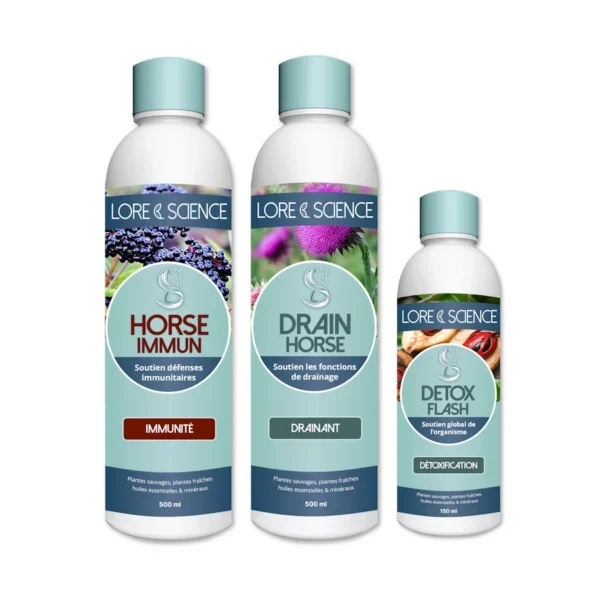

Health Booster Pack - Immunity and detox support for horses
The initial price was: €175.70.158,13 €The current price is: €158.13.
Conclusion
Seasonal changes place heavy demands on a horse's body. By combining an adapted lifestyle, a controlled dietary transition and targeted natural support, you can help your horse get through these periods gently. In case of doubt or persistent symptoms, ask your veterinarian for advice.
FAQ
When should I start a detox program for my horse?
Ideally 2 to 3 weeks before the season changeover, then continue for 3 to 6 weeks depending on the animal's response.
Is a detox suitable for working horses?
Yes, by favouring a gentle detox, compatible with training and recovery, and by adapting energy intake.
How do I know if my horse needs immune support?
Early signs include difficult moulting, unusual fatigue, irregular droppings or increased sensitivity to small cold snaps.
Can I use the Essential Health Pack with a veterinary treatment?
The pack can be integrated into a comprehensive treatment program. If you are currently undergoing treatment, ask your veterinarian for advice.