
A horse's metabolism is put under daily strain by diet, training, stress and the environment. When the emunctories - mainly the liver, kidneys, skin and intestines - are overloaded, signs of fatigue, stiffness or reduced performance may appear. Draining the body aims to support these organs in their elimination work, restoring comfort and vitality.
Why might a horse need drainage?
Several situations can increase the toxic or metabolic load and justify a drainage cure:
- Seasonal changes (spring/autumn) with moulting and feeding variations.
- Rations rich in starch/sugar, dusty forages or those containing mycotoxins.
- Recent medication (deworming, anti-inflammatory treatments) or convalescence.
- Stress, transport, competition, change of lifestyle or boarding.
- A sedentary lifestyle, excess weight or advanced age, all of which slow down physiological processes.
- Humid, dusty environment or presence of skin irritants.
Signs to recognize: indicators of an overloaded body
In horses, the signs are sometimes subtle. The following clues should attract your attention:
- Dull coat, difficult shedding, sensitive skin or dandruff.
- Lethargy, slow recovery after exercise, reduced desire to work.
- Morning stiffness, minor locomotor discomfort, slight congestion.
- Soft droppings, alternating diarrhea/constipation, flatulence, abdominal tenderness.
- More pronounced urine odour, less drinking water consumed.
- Irregular appetite, irritability, nervousness or loss of concentration.
When should a horse's body be drained?
Generally speaking, one or two cures a year are sufficient for a healthy horse. The key periods are :
- In spring and autumn to accompany transitions (moulting, new grass, climatic variations).
- After a period of treatment (deworming, antibiotics, anti-inflammatories), on veterinary advice.
- When returning to work, changing diet or pension.
- After repeated travel, competitions or significant stress.
- In convalescence, to support elimination functions.
Precautions: avoid treatments without veterinary advice for pregnant or nursing mares, foals or horses with a declared pathology. If in doubt, ask your veterinarian for advice.
How to drain in practice: action plan
Early management significantly improves drainage efficiency and limits the duration of discomfort. Implement the following steps, in sequence or simultaneously, depending on the situation:
- Make sure clean water is always available, and check that drinking troughs are working properly.
- Encourage daily movement (paddling, active walking, light sessions) to stimulate circulation.
- Clean up the environment: limit dust and mould (dry hay storage, clean bedding).
- Adapt the ration: give priority to quality hay, reduce excess starch and increase fiber.
- Supportdigestive balance in case of irregularities (yeast, prebiotics).
- Use natural drainage supplements adapted to the horse, respecting dosage and duration.
- Consult your veterinarian in the event of marked or persistent symptoms, or in case of doubt (gestation, pathologies).
Natural drainage: Drain Horse supports elimination functions
Drain Horse is the vegetable support formulated to support the horse's natural elimination and emunctory functions.
The benefits of Drain Horse :
- Helps support hepato-urinary and digestive functions.
- Helps stimulate natural drainage and elimination functions.
- Ideal for preventive support, 1 to 2 times a year, perhaps combined with a detox supplement
A gentle 25-day drainage program to help the horse's body and overall well-being.


-
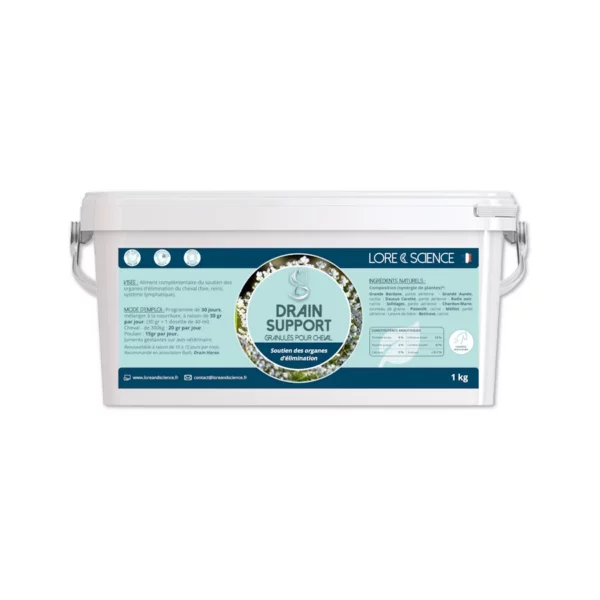

Drain Support - Supporting the horse's elimination functions
Price range: €44.90 to €99.90
Regular comfort: Drain Support for daily support
Drain Support is a natural granulated supplement designed to gently support horses' elimination functions. Its formulation is designed to be easily integrated into the horse's feeding routine and daily management.
The benefits of Drain Support :
- Helps support the liver and kidneys in their elimination role.
- Supports horses with urination difficulties.
- To help older horses.
Why is this supplement relevant? It's a regular natural draining aid to improve the comfort of horses suffering from urinary problems or ageing, for everyday well-being.
Conclusion
Drainage of the horse's body is a useful management tool when carried out at the right time and with simple measures: hydration, movement, balanced ration and targeted supplementation. By taking a gentle, gradual approach, and listening to the signs, you'll promote comfort, performance and well-being over the long term.
FAQ
How often should a drainage cure be carried out?
For a healthy horse, 1 or 2 times a year, especially in spring and autumn, are generally sufficient. Adjust according to activity, age and your veterinarian's advice.
Can an older horse be drained?
Yes, with caution and veterinary advice. Give preference to a gentle supplement like Drain Support, optimal hydration and close monitoring.
What's the difference between "drainage" and "liver detox"?
Drainage targets all emunctories (liver, kidneys, skin, intestines). A hepatic detox targets the liver in particular. The two approaches can be complementary if properly implemented.
Can I combine Drain Support or Drain Horse with other supplements?
Yes, we generally recommend combining it with the Détox Flash supplement, but avoid redundancy of active ingredients. Ask your veterinarian or a professional for advice before making any specific combination.